What Terminal Services Manager does across your RDS servers
Watch sessions and processes in real time, chart CPU, memory, and RDP connection quality, and act on every Remote Desktop host from one console.
Session and user monitoring
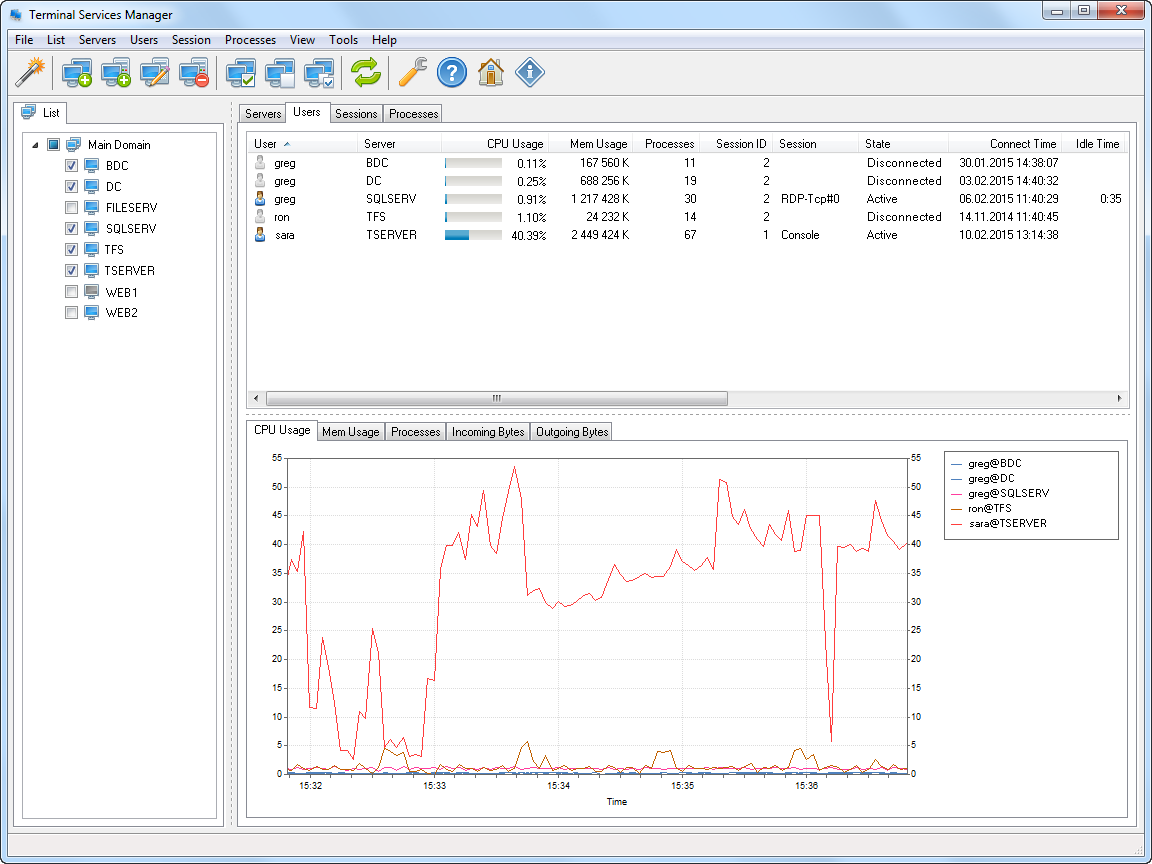
Connect to one or more RDS servers and see all sessions, users, and processes in one place. Per-user columns show output frame rate and frame quality. A connection quality score from 0 to 100% and a 4-bar icon rate each session's connection health. Built-in filter presets pick out poor and degraded connections. Server-level columns show the average round-trip time, frame rate, and frame quality, and the median connection quality across all sessions. Seven diagnostic columns help troubleshoot slow sessions: packet loss, retransmission rate, FEC correction rate, frames skipped (client/network/server), and encoding time. Use filters like loss > 1% or retransmission > 5% to find problem sessions across your servers.
Server performance monitoring
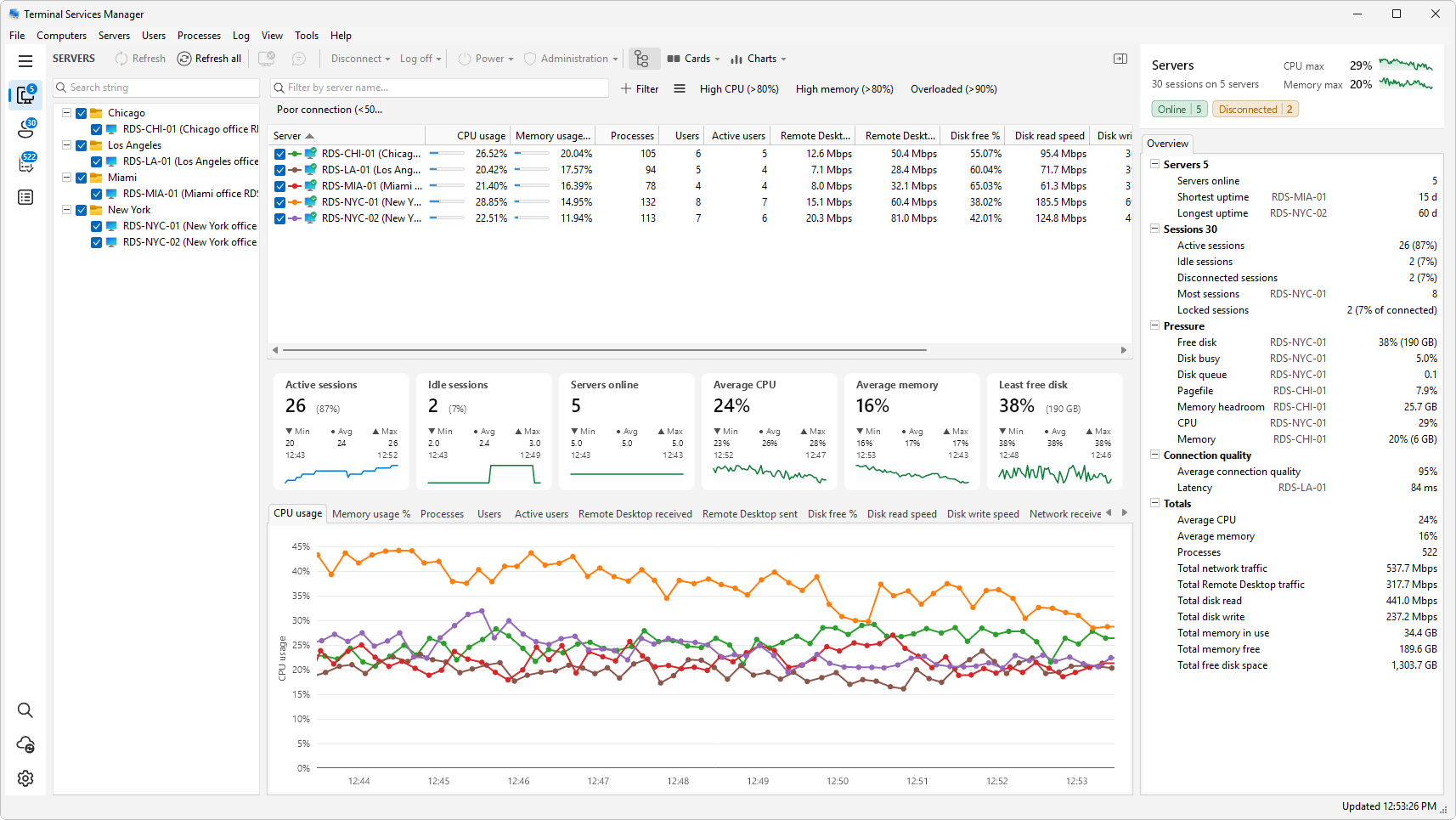
CPU, memory, and 11 additional server metrics: available memory, pagefile usage, disk free space, disk read/write speed, disk busy percentage, disk queue length, network bytes received and sent, and system uptime. All with real-time interactive charts.
Process monitoring
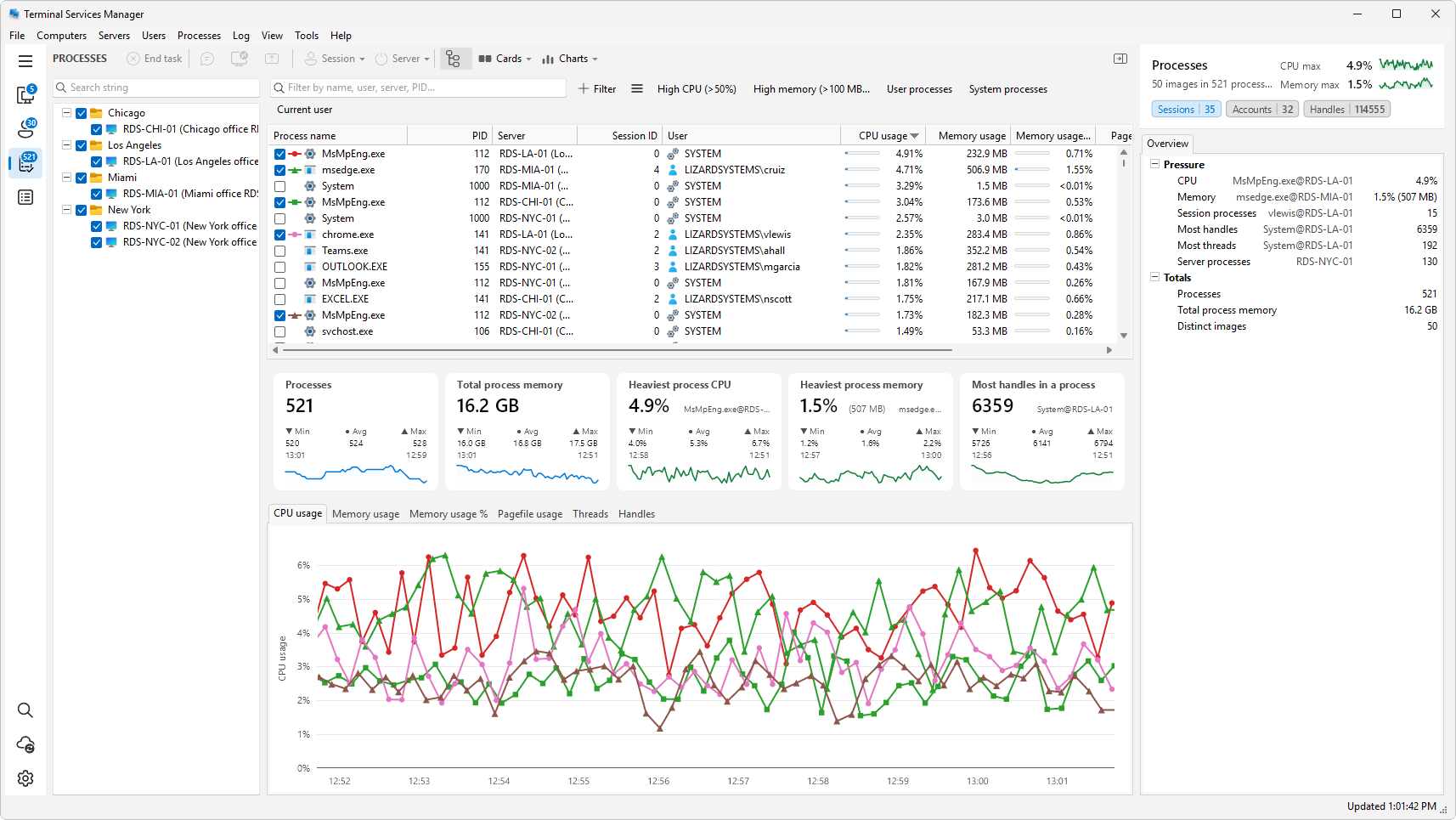
View processes running on remote servers with per-process CPU usage, memory usage, handle count, and thread count. End tasks remotely. Filter by user, process name, CPU or memory usage with built-in presets.
Inspector
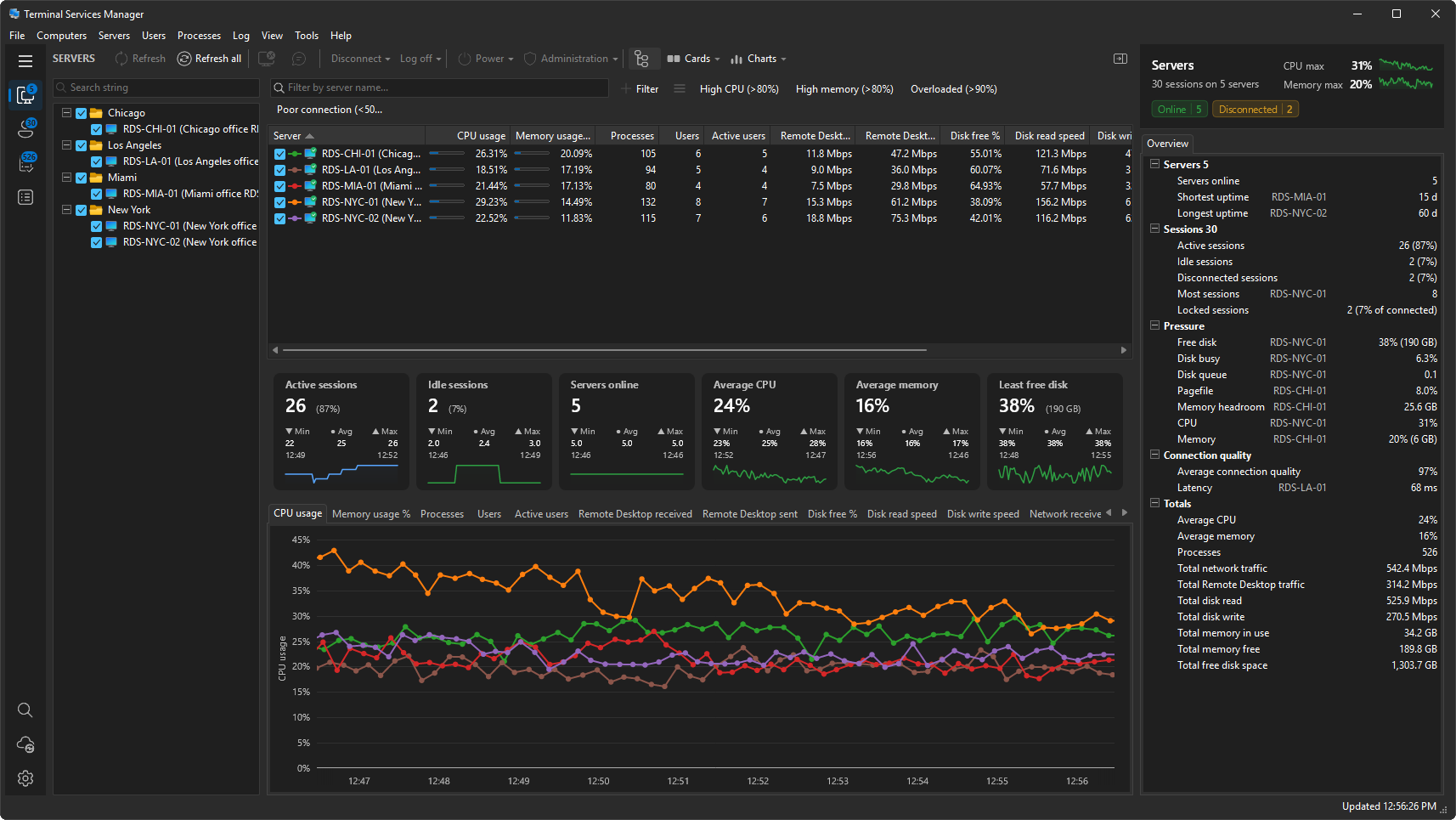
Pick a server, session, or process and the inspector on the right of the window describes it: CPU and memory with their recent trend, its state, and every property the list holds. With nothing picked, it sums up the whole list and puts any reading past its threshold at the top, worst first. A triangle (warning) or a diamond (critical) before a reading's name shows that it passed its threshold.
For servers and users, an Active Directory tab adds what the domain holds. For a user session, that is job title, department, manager, contacts, account state, password expiry, groups, and the management chain. For a server, it is the computer account, role, registered services, delegation, Kerberos encryption, LAPS, notes, extension attributes, SID, and GUID.
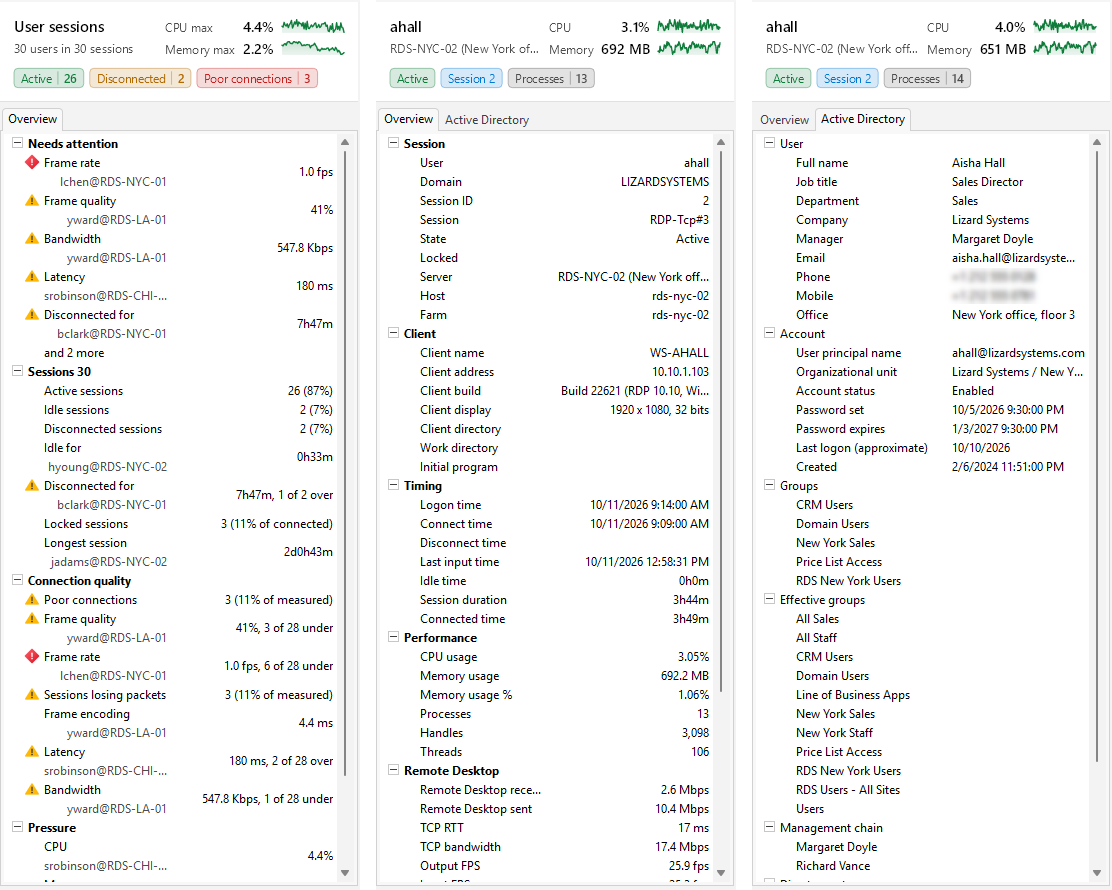
Summary cards
A row of cards sits between each list and its charts. Each card shows the current figure, its low, average, and high over the chart's time window, and a sparkline.
Choose which cards each list shows, put them in the order you want, set their size, and set the levels at which they turn amber and red. To hide the cards, clear Show the card band in the Cards menu above the list.

Interactive performance charts
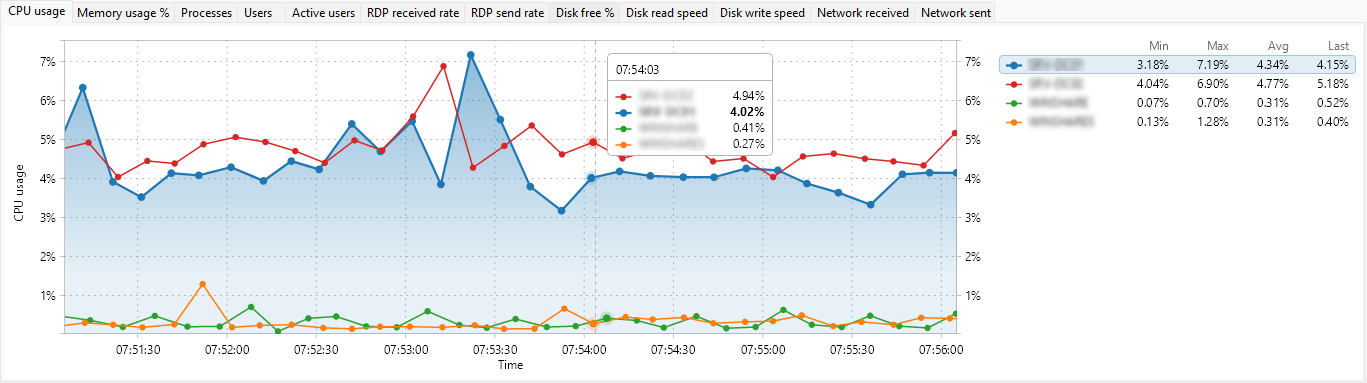
Zoom through time windows with the mouse wheel. The legend can show min, max, average, and current values. Copy a chart to the clipboard or save it as a PNG file.
Administration tools
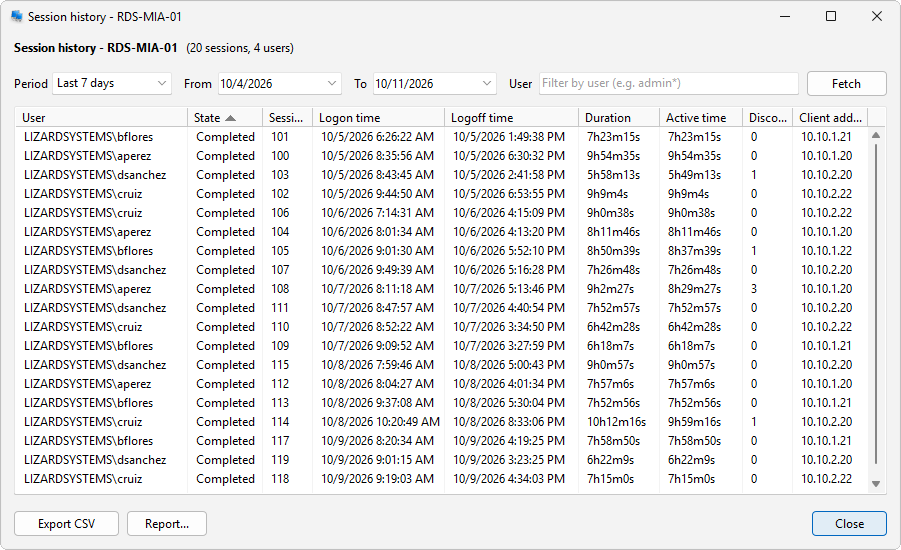
Log off or disconnect idle users across servers by time threshold. Log off disconnected users to clean up stale sessions. Shadow (remote control) user sessions. Manage user profiles on remote computers. Build a session history from the Windows Event Log and export it as an HTML report with charts.
Track user activity: logon, logoff, disconnect, and reconnect events. Monitor failed logon attempts. View RDS licensing info. Send messages to users with presets and variables. Restart or shut down servers remotely. Export lists to CSV.
130+ administrative commands
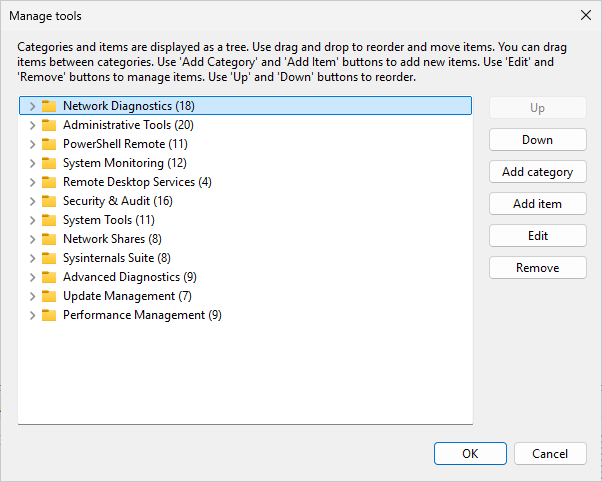
130+ commands in 12 categories: Network Diagnostics, PowerShell Remote, System Monitoring, Security & Audit, Sysinternals Suite, and others. You can add your own commands and categories, and import command sets from JSON or XML, and export them to JSON, XML, or plain text.
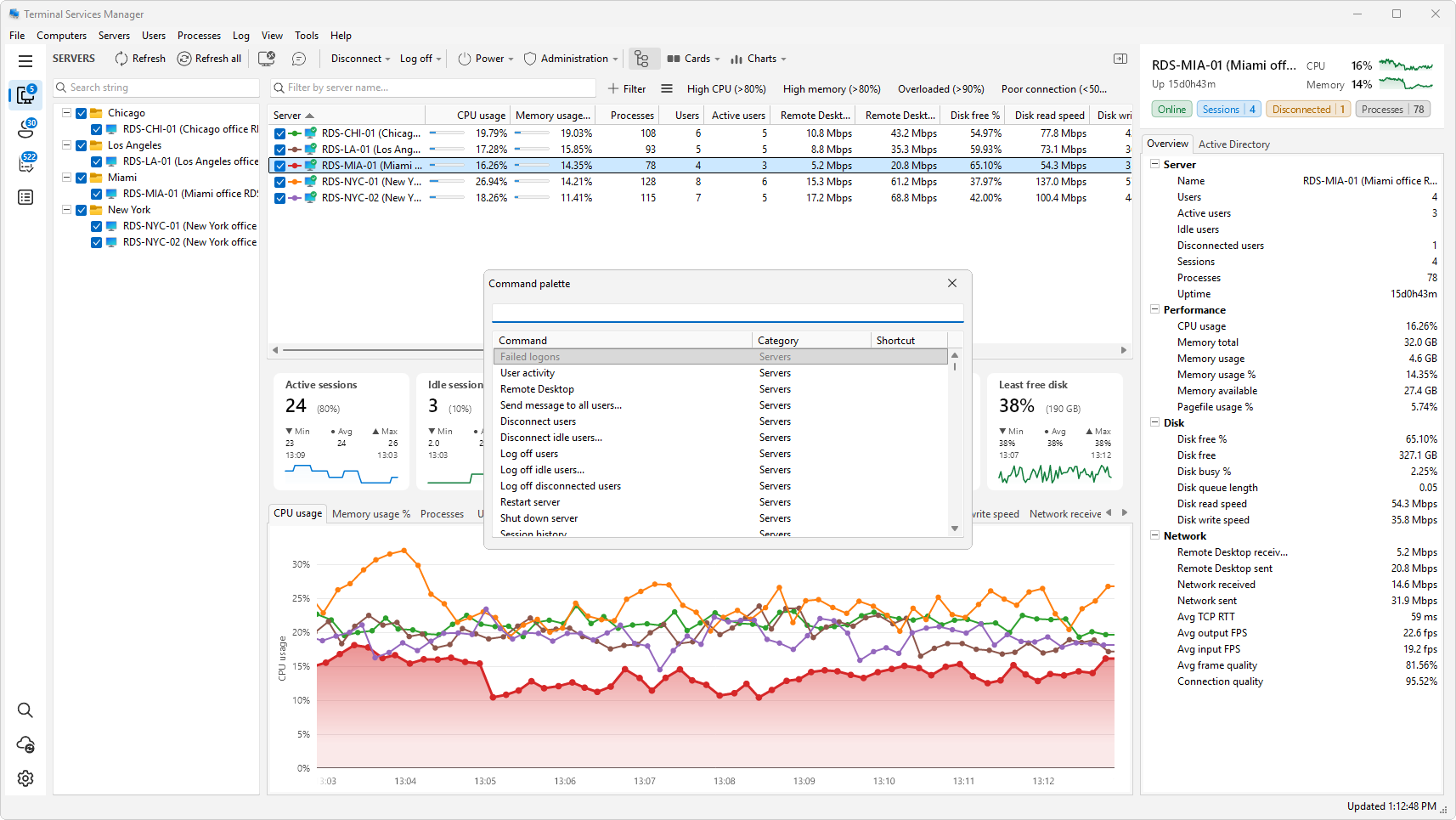
Command palette
Press Ctrl+Shift+P and start typing. The palette finds any menu command or Tools command, in English or in your language, puts the commands for the selected row first, then the ones you run recently and often.
Tools commands can also act on a session or a process, with the user, client, session, and process available as variables. The User sessions and Processes lists have their own Tools menu with a few ready-made commands.
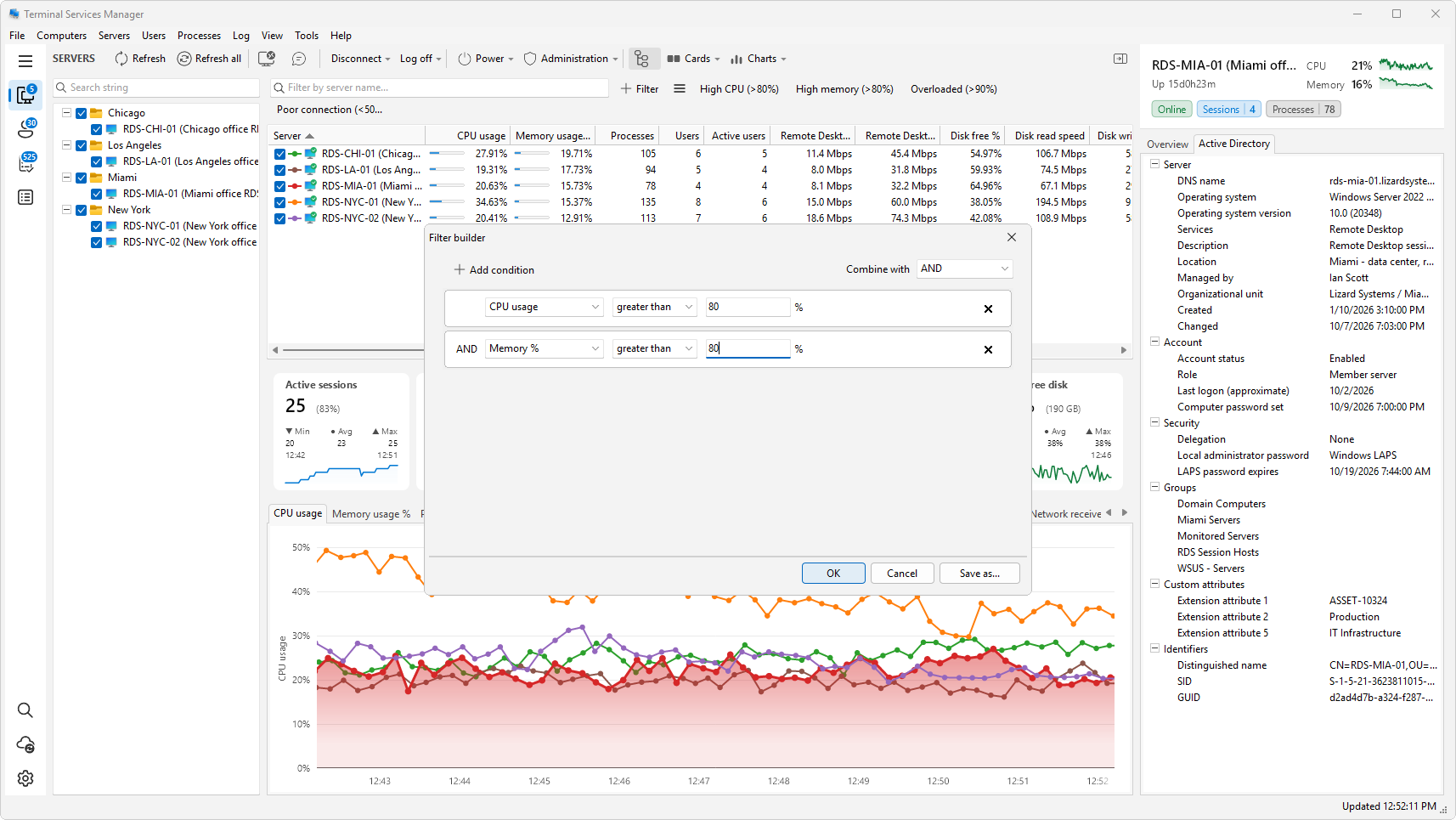
Advanced filtering
Build filters with AND/OR logic, text matching, numeric comparisons, and a "between" operator. Active conditions show as removable chips. Quick search highlights matches in the tree. Includes 20+ presets for the Servers, User sessions, and Processes lists.
Sidebar
A sidebar down the left of the window leads to the Servers, User sessions, Processes, and Log sections and shows how many servers, user sessions, and processes there are. The Servers, User sessions, and Processes lists have a row of commands across the top, with Cards and Charts buttons for the summary cards and charts below it.
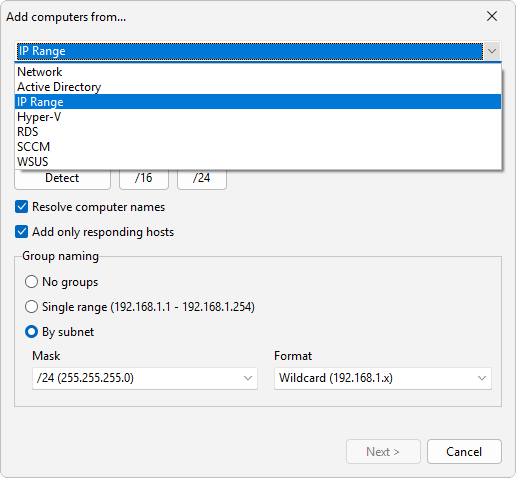
Computer discovery
Find computers automatically from 7 sources: Network, Active Directory, IP Range, Hyper-V, RDS Connection Broker, SCCM/MECM, and WSUS.
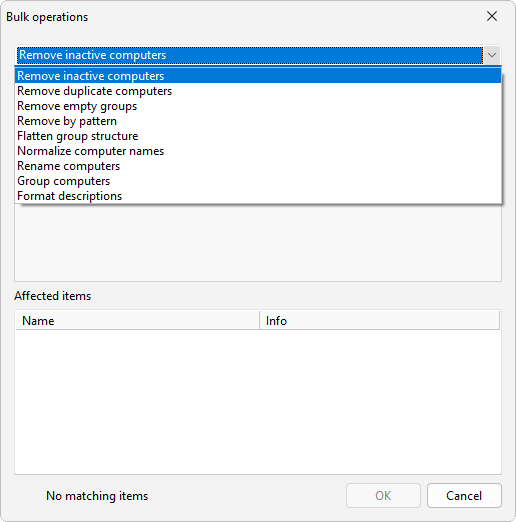
Bulk operations
Remove inactive or duplicate computers, normalize names, add prefixes, group by subnet or domain, and format descriptions from templates. A live preview shows what will change before you apply.
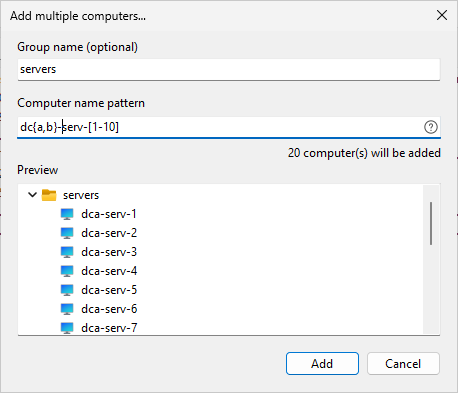
Add multiple computers
Enter a name pattern and let the program generate the list. Supported patterns: comma list {a,b,c}, numeric range [1-10], leading zeros [001-15], range with step [1-10:2], alpha range [A-Z]. Patterns can be combined: server[01-10], 192.168.1.[1-254], rack[A-C][1-3]. A live preview shows all generated names before you add them.
Status report
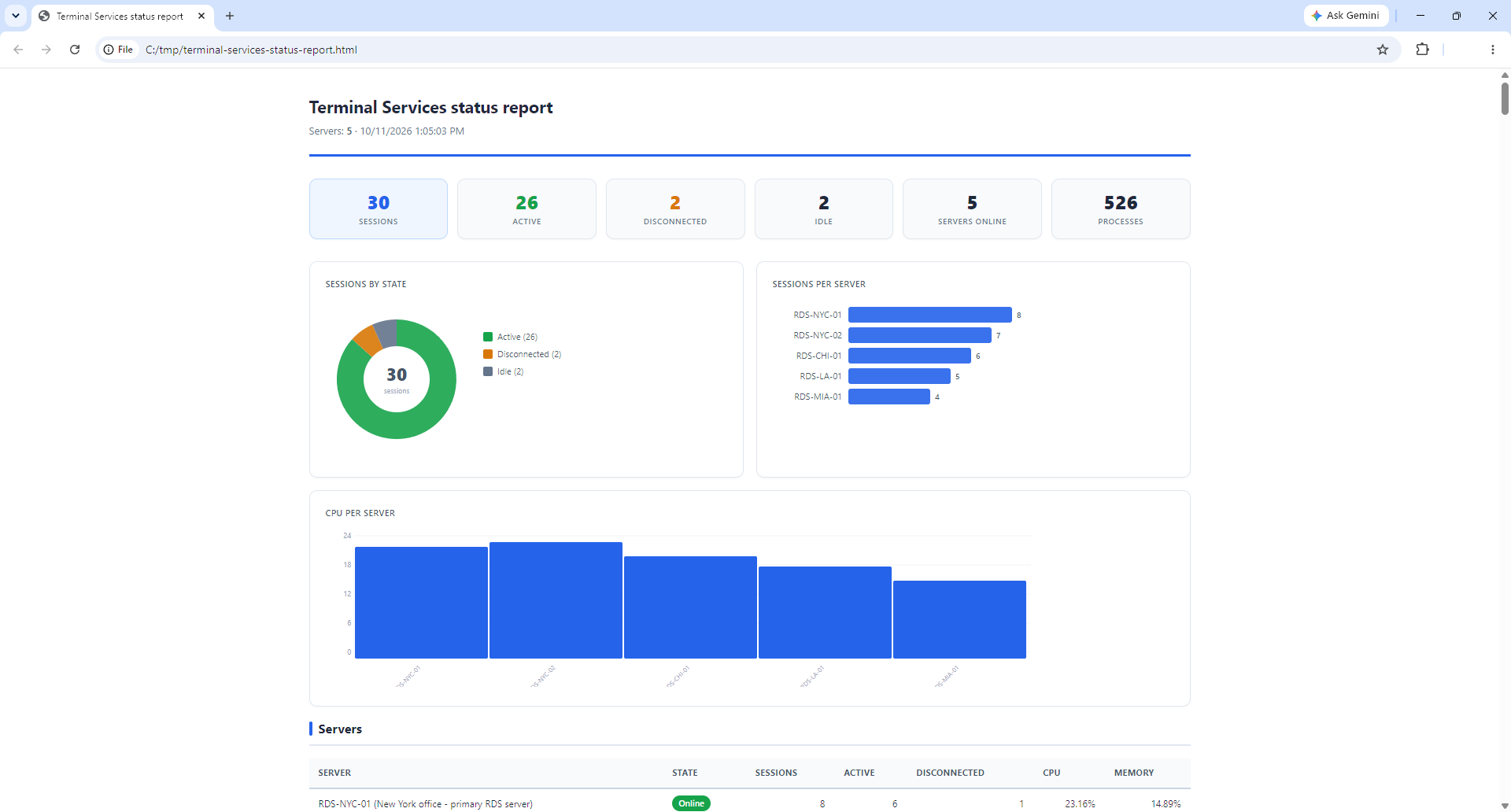
File > Report builds a self-contained HTML status report of the monitored servers: counters, sessions by state, sessions and CPU per server, and tables of servers, sessions, and, optionally, processes.
Dark Mode
Three modes: follow Windows theme, always dark, or always light. High-DPI support with per-monitor awareness. Works on Windows 11.
16 languages
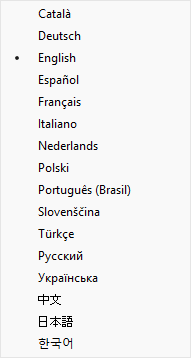
English, Russian, Ukrainian, French, Spanish, Catalan, Slovenian, Brazilian Portuguese, Chinese, Dutch, German, Italian, Japanese, Korean, Polish, and Turkish.